





- Visa Consultancy
-

By MD Consultancy
- 25.10.2025
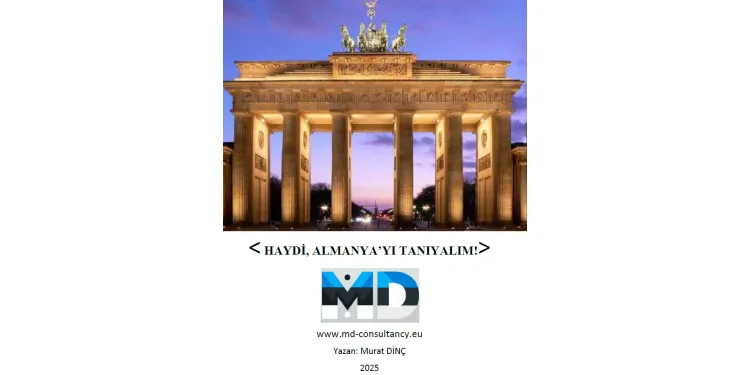
Get to Know Germany!
A Confident Step into Germany: Culture, Life and Adjustment Guide
Explore the history, society and culture of your new country. This guide offers basic, practical information for adjustment when starting life in Germany.
Historical Milestones
1871: Following Otto von Bismarck’s “blood and iron” policy, the German Empire was proclaimed under Wilhelm I at Versailles. Germany became politically united.
1914–1918: First World War, German defeat and collapse of the empire.
1918–1945: Weimar Republic, Nazi dictatorship and Second World War.
1933: Adolf Hitler became chancellor. Dictatorship and the Third Reich led towards the Holocaust and war.
1936: Berlin Olympics became an international stage for Nazi propaganda.
1939–1945: Second World War, Germany’s total defeat and division.
1949: Establishment of the Federal Republic and German Democratic Republic.
1961: Construction of the Berlin Wall, a defining Cold War symbol.
1989–1990: Peaceful revolution, fall of the Wall and reunification. German Unity Day, 3 October, is a public holiday.
Wirtschaftswunder — Economic Miracle
Post-war recovery was a political and social transformation as well as an economic one.
After the war, infrastructure destruction, housing shortages and food scarcity required economic and social reconstruction. Millions of men had died and the country was divided into US, British, French and Soviet occupation zones.
1. Laying the Foundations, 1945–1948
Currency reform in 1948 replaced the Reichsmark with the Deutsche Mark, countering the black market, restoring confidence and laying foundations for a market economy.
Marshall Plan assistance of US$1.4 billion in 1948–1952 financed infrastructure and industry.
2. The Social Market Economy
Economics Minister Ludwig Erhard eased state controls and developed the social market economy.
Coal and steel output grew rapidly, especially in the Ruhr.
The 1957 competition law protected competition and stimulated markets.
3. Employment and Production Growth
Unemployment: 11% in 1950 to 1.3% in 1960.
Industrial production reached pre-war levels in 1950.
The Volkswagen Beetle supported mass car ownership.
1950–1960: Rapid Growth
By the mid-1950s, industrial production exceeded 1936 levels. Exports grew strongly, with Volkswagen, Mercedes-Benz, chemicals and machinery prominent.
Televisions, cars, refrigerators and modern homes came to represent middle-class prosperity.
West Germany signed its first labour-recruitment agreement with Italy in 1955, followed by Spain and Greece in 1960 and Türkiye in 1961. Migration significantly shaped a multicultural society.
In 1960, Germany became the second-largest exporter.
The European Coal and Steel Community in 1952 and reconciliation with France helped lay the foundations of the EU.
Four million homes were built in the 1950s.
The 1957 pension reform introduced a dynamic pension system.
1960–1973: Institutionalising Prosperity
Welfare-state reforms covered education, health, housing and social security.
By the 1970s, Germany and Japan were leading industrial exporters. The Beetle was sold worldwide as a symbol of the miracle.
1980–1990: Technology and Reunification
Investment in computers, automation and high technology expanded.
The Wall’s fall in 1989 and reunification in 1990 marked a second phase. Per-capita income quadrupled between 1950 and 1970. Within twenty years, a devastated country became one of the strongest economies. This “German miracle” is associated with discipline, productivity, social consensus and market principles. Germany remains a backbone and driving force of the EU economy.
Germany’s Healthcare System
The system combines public and private insurance within a state-regulated social-insurance framework. Health insurance is compulsory.
1. Statutory Health Insurance — GKV
The general contribution rate is 14.6%, plus the insurer-specific supplementary contribution. Employee/employer shares and family coverage depend on circumstances. Long-term care insurance is separate.
It covers much hospital, medical, prescription and basic dental care.
Before entry, travel/incoming insurance and regular German insurance may offer different cover. Confirm continuous, application-appropriate protection from arrival until employment with the mission and insurer.
2. Private Health Insurance — PKV
Employees above a specified income threshold, self-employed people and civil servants may choose it.
Benefits depend on the policy. Review coverage, cost-sharing and exclusions in the contract.
Healthcare Access
The family doctor — Hausarzt — is the first point of contact.
Specialists such as neurologists are generally accessed by referral.
Emergency departments operate 24/7.
Emergency number: 112.
Medicines
Prescription medicines generally involve a €5–10 co-payment. Pharmacies — Apotheken — are widespread.
Sources and Update
Last content review: 18 November 2026.
Economics Ministry — Social Market Economy and Wirtschaftswunder
Haus der Geschichte — Labour Migration
Federal Health Ministry — GKV Contributions